
March 2022
M T W T F S S
 123456
78910111213
14151617181920
21222324252627
28293031  

Month: March 2022

Can You Sue More Than One Person?

Personal injury claims sometimes require victims to sue more than one person. Car crashes are a perfect example of when it might be necessary to pursue personal injury claims against more than one person. Workplace accidents are another instance when multiple parties may be responsible for your injuries.

When you’re hurt by someone else’s negligence, it’s important to ensure you get the full amount of compensation afforded to you by personal injury law in New Mexico. Filing multiple claims can maximize your damages.

Hiring an experienced Albuquerque personal injury lawyer can help you determine whether more than one person is responsible for your injuries.

How to determine personal injury liability

Whether you are dealing with one party or two, proving personal injury liability by New Mexico personal injury law standards is the same.

To establish liability, your personal injury attorney must prove the responsible parties:

  • Owed you a duty to act reasonably.
  • Failed in their duty by acting negligently.
  • Caused your injuries because of their carelessness.
  • Produced damages through their negligence.

Let’s take the case of a car crash, where a manufacturing defect in the vehicle caused the driver to lose control and collide with your vehicle, causing you serious injuries. The at-fault driver admits to police investigating the accident that his car had been acting weird for a few days, but he failed to call a mechanic or the dealership to have it checked. In this case, you could sue the driver plus the car manufacturer if a true defect caused the accident.

Benefits of suing more than one person

The biggest benefit of suing more than one person when you suffer a personal injury is maximizing on your damages. Let’s go back to the example of the car crash with a defective car. That kind of accident could leave you with debilitating spinal cord injuries that cause paralysis. You would be unable to work and may accumulate millions of dollars in medical bills.

Suing all responsible parties for an accident of this magnitude ensures you get enough compensation to cover all your medical bills, plus any ongoing expenses related to a permanent disability.

Joint and severable liability with multiple defendants

Something to keep in mind if you decide to sue more than one person is the joint and severable liability laws in New Mexico. Joint liability means all defendants named in your personal injury claim are equally responsible for your losses. Several liability means the defendants are only responsible for a part of your losses.

Let’s take the car crash example again. You could sue the driver of the vehicle for causing the crash, and the driver could turn around and sue the vehicle manufacturer. When this happens, it’s called joint and several liability by the legal system.
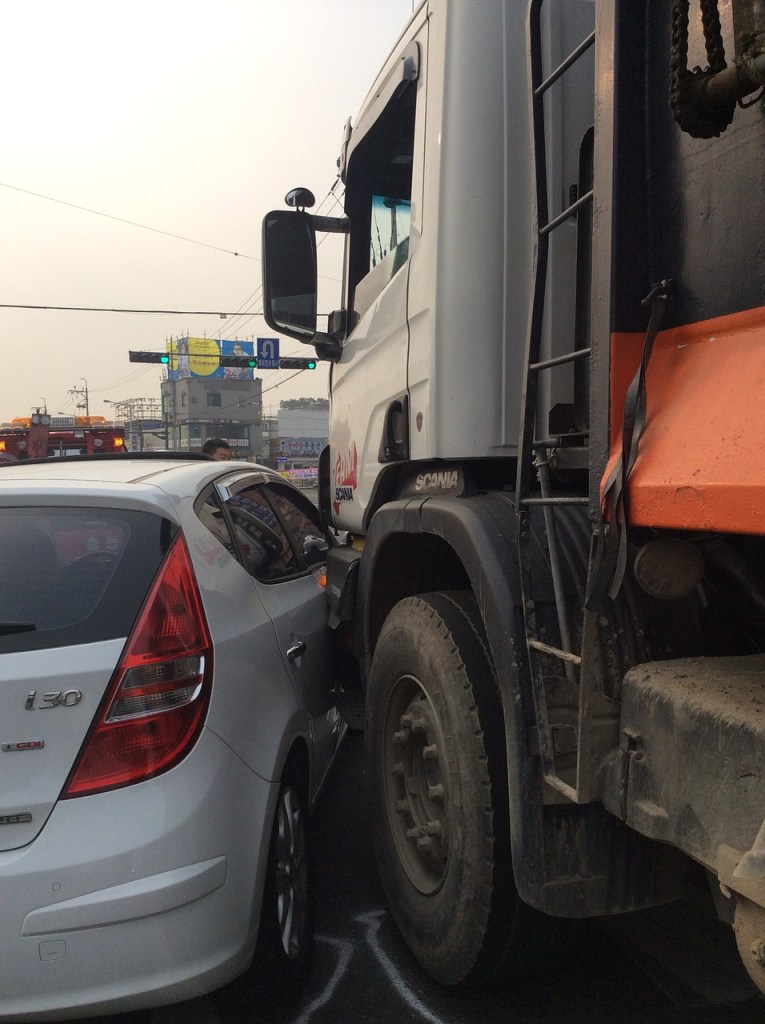
You might be able to sue the driver and the truck company in a personal injury lawsuit stemming from a truck crash.

When to sue more than one person

New Mexico law allows you to recover damages from more than one person if you can meet the burden of proof in establishing each party’s liability. Working with an experienced personal injury attorney can help with determining whether more than one party shares responsibility for your injuries.

Here are some examples of when you might want to sue more than one person to maximize your chances of receiving fair compensation.

  • Truck crashes. If you are the victim of an accident involving a truck driver, you might be able to sue the truck driver and the trucking company for which he works. An example of when this tactic might be successful would be a trucking company pressuring one of its drivers to cut their required breaks short to make more deliveries. The driver falls asleep at the wheel and crashes into your car.
  • Slips-and-falls. Let’s say you slip and fall on an uneven sidewalk while shopping at a local retail outlet. The tenant knew the sidewalk was in ill repair and did not post a warning to shoppers about the hazard. The landlord failed to make the necessary repairs when notified by the tenant of the issue. You might be able to sue both the tenant and the landlord for your injuries since each played a role.

Hiring a personal injury lawyer can help

Living with temporary or permanent disability can affect your current and future earnings, plus rack up expensive medical bills. You want to make sure all parties responsible for your injuries share in the damages. Hiring a personal injury lawyer can help you determine who is at fault and how best to pursue personal injury claims against them.

Contact The Law Offices of Bill Russell for a free case evaluation. They go the extra mile in personal injury cases to ensure you get fair compensation.


Women’s History Month: Sexism in the Workplace

March is Women’s History Month and the perfect time to talk about sexism in the workplace. Sex-based discrimination on the job is a real concern for New Mexican women. It’s also considered a civil rights violation under Title VII of the Civil Rights Act of 1964.

Just how many women experience inequity in the workplace? According to data from Pew Research, about four in ten working women have faced gender-based discrimination. Discrimination comes in many forms, including earning less than male counterparts to being passed over for a promotion.

If you believe you’re the victim of sexism in the workplace, you have legal options. Working with an experienced civil rights attorney can get you the resolution you seek.

What is sex-based discrimination?

Sex-based discrimination in the workforce takes on many forms, according to the U.S. Equal Employment Opportunity Commission (EEOC). It includes firing, fringe benefits, hiring, job assignments, layoffs, promotions, and salary.

Sexism in the workplace also includes sexual harassment. Women subjected to unwelcome sexual advances – verbal or physical – have a legitimate complaint. Offensive remarks about your sexual orientation, gender identity, or pregnancy status also fall into this category.

Gender discrimination can lead to a hostile work environment for women.

What constitutes a hostile work environment in New Mexico?

Sometimes sex-based discrimination is so severe it creates a hostile work environment. New Mexico Statute 28-1-7 (2018) defines when sexism in the workplace crosses that line. Herald v. Bd. Of Regents of the Univ. of New Mexico is an example of sex-based discrimination turning a workplace hostile. The presiding judge in the case rules in the defendant’s favor based on three claims:

  • Disparate treatment.
  • Sex discrimination.
  • Retaliation.

There are several signs that a workplace has become antagonistic. Any time you feel uncomfortable, scared, or intimidated by unwelcome conduct from coworkers or supervisors, your workplace meets the legal definition of hostile.

How to prove sex discrimination

When it comes to proving sex discrimination in the workplace, it always comes down to the decision maker’s intent. Can you support your claim that you were overlooked for a promotion or fired from your job based solely on the thinking of the person in charge of the situation? How do you prove what’s inside another person’s head, guiding their choices?

There may be signs and supporting evidence of a person’s intent. Let’s say your boss repeatedly passes you over for a promotion, even though you have more experience and qualifications than the male colleague he instead advances. A pattern of behavior counts as intent. Here’s how you take circumstantial evidence and build your case:

  • Provide evidence you are in a protected class.
  • Provide evidence you were qualified for the promotion.
  • Provide evidence you didn’t get the promotion.
  • Provide evidence the employer promoted someone not in your protected class or left the position unfilled.

There are other kinds of anecdotal evidence you can use to support your case. Maybe your supervisor makes negative, offhand remarks about mothers who work outside the home. Document this kind of behavior. It may be useful if you pursue a gender discrimination case.

Filing a sex discrimination claim in New Mexico

If you’ve decided to pursue a gender bias claim against your employer, speaking to an experienced civil rights attorney is the first crucial step. Your attorney can help you decide whether you should file your complaint with the New Mexico Human Rights Bureau or the EEOC. The two agencies have a work-sharing agreement, allowing them to cooperate with each other to process claims.

Acting fast in sex discrimination cases is required under New Mexico Statutes. You have 180 days from the time you believe you were discriminated against for state filing and 300 days for federal filing (EEOC). While it’s not necessary to have an attorney to file a claim with either agency, it is highly recommended.

You also have the option of filing a federal civil rights lawsuit against the offender in a sex discrimination case. Consulting with a civil rights attorney helps you identify if this is the best course of action. Some employment contracts call for mandated mediation with an employer before legal action can be pursued. Your attorney can review your case and provide guidance based on your unique situation.

You don’t have to tolerate sexism at work

Sexist attitudes and practices have no place in the 21st century workforce. You don’t have to tolerate sex discrimination that causes a hostile workplace. Part of challenging this kind of toxic workplace culture includes legal recourse.

Reach out to the experienced civil rights attorneys at The Law Offices of Bill Russell to schedule your case evaluation. We’ll help you rid your office of gender bias so you can get back to working hard.

Minimum Auto Insurance in New Mexico: Why 25/50/10 Falls Short

Many New Mexico drivers carry only the minimum auto insurance the law requires. It keeps premiums low, but it can leave both the at-fault driver and the injured person in a tough spot after a serious crash.

Here is what minimum-limits coverage really pays, why it often falls short, and how to protect yourself.

What Is the Minimum Insurance in New Mexico?

New Mexico requires drivers to carry at least:

  • $25,000 for bodily injury to one person
  • $50,000 for bodily injury to all people in one accident
  • $10,000 for property damage

This is often written as 25/50/10.

Why Minimum Coverage Falls Short

A single ambulance ride, emergency room visit, and imaging can cost thousands of dollars. Add surgery, physical therapy, lost wages, and pain and suffering, and a serious injury can quickly exceed $25,000.

Example: you are rear-ended and suffer a broken wrist that needs surgery. Your medical bills and lost wages total $60,000. If the at-fault driver has only a 25/50/10 policy, their insurer will generally pay no more than $25,000 for your injuries.

Property damage limits are also low. $10,000 may not cover the cost to repair or replace a newer vehicle.

What Happens When Damages Exceed the Limits?

When your losses are greater than the at-fault driver’s coverage, there are several possible sources of additional recovery:

1. Your underinsured motorist (UIM) coverage

Underinsured motorist coverage on your own policy can pay when the at-fault driver’s insurance is not enough. New Mexico requires insurers to offer uninsured/underinsured motorist (UM/UIM) coverage, and it can only be rejected in writing. If an insurer did not properly offer it, you may have more coverage than you think.

2. Other responsible parties

If the driver was working at the time of the crash, their employer’s commercial policy may apply. Other parties, such as a vehicle owner who lent the car, may also be responsible.

3. Other policies

The at-fault driver may have an umbrella policy, or more than one vehicle policy may apply.

4. The at-fault driver personally

In some cases, the at-fault driver can be personally responsible for damages beyond their policy limits. In practice, collecting from an individual can be difficult, which is why insurance coverage is usually the focus.

What About Uninsured Drivers?

New Mexico has a high number of drivers with no insurance at all. If an uninsured driver hits you, your own uninsured motorist (UM) coverage can pay for your injuries. UM coverage may also apply in some hit-and-run crashes.

How to Protect Yourself

  • Review your own policy. Check your bodily injury, UM/UIM, and medical payments coverage.
  • Consider UM/UIM limits that match your liability limits. This coverage protects you and your family.
  • Consider medical payments coverage, which can help with medical bills regardless of fault.
  • Keep your declarations page somewhere you can find it after a crash.

Frequently Asked Questions

Will the insurance company pay more than the policy limit?

Generally, an insurer’s payment is capped at the policy limits. However, New Mexico law requires insurers to try in good faith to settle claims fairly when liability is reasonably clear. An insurer that fails to do so may face additional liability in some situations.

Should I accept a policy-limits offer?

Talk to a lawyer before signing anything. Accepting a settlement and signing a release can affect your ability to make an underinsured motorist claim if you do not follow the right steps.

Do I need a lawyer for a minimum-limits case?

When the coverage is limited, finding every possible source of recovery is critical. A lawyer can review all available policies and help you avoid steps that could hurt your UIM claim.

Hurt by a Driver With Low Insurance Limits?

The Law Offices of Bill Russell helps injured New Mexicans find every available source of compensation after a car accident. Call (505) 218-7844 or contact us online for a free consultation.

Not sure what your policy covers?

Attorney Bill Russell is a former New Mexico insurance agent who offers complimentary coverage reviews. Request a free coverage review →

This article is for general information only and is not legal advice. Every case is different. Reading this post does not create an attorney-client relationship.

Office:
Monday – Friday: 9am to 6pm

Phone:
24/7